Santos, October 2026. Notes from our Brazil operations after a run of BROB and BQS attendances across Santos, Paranaguá and Rio Grande, including one on board the CEMTEX INNOVATION.
A port that never gives you a quiet hour
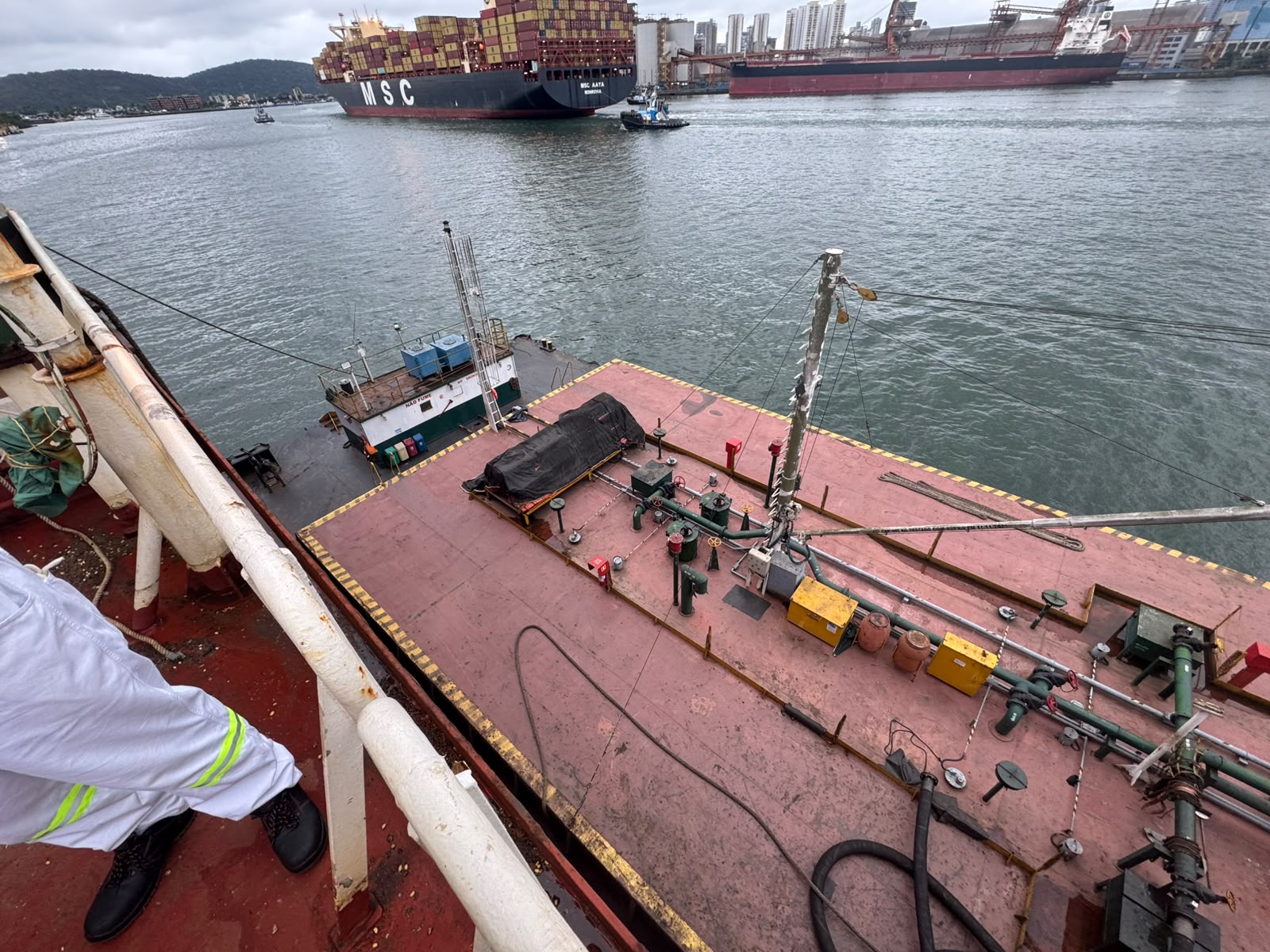
Santos is the largest port in Latin America and the main bunkering point on the Brazilian coast. Petrobras and the independent suppliers deliver VLSFO and LSMGO by barge while the vessel is loading at the grain, sugar or container terminals. Between berth shifts, barge-delivered bunkers and loading windows that never stop, a remaining-on-board figure can age fast: the number you took at 08:00 may no longer describe the vessel at 10:00.
The same applies, with local variations, in Paranaguá, where deliveries happen at the anchorage with a loaded vessel at trim, and in Rio Grande, where an on-hire survey and the first bunker delivery usually share one attendance.
Where the disputes really come from
After this stretch of attendances the pattern repeats: most of the disputes we see are not about honesty. They are about timing and references. Four situations produce numbers nobody can defend later:
- A sounding taken before a trim change. The vessel keeps loading; the tank table was entered with a trim that no longer exists.
- A tank measured while the vessel is still working ballast. List and trim are moving while the tape is in the pipe.
- A temperature read at the top of a heated HFO tank. The upper layer is several degrees warmer than the bulk; the density correction follows the wrong temperature.
- Figures taken from the wrong tables. A photocopy on the bridge that does not match the approved calibration book, or a table for a sister ship.
What we insist on with our teams
The procedure our surveyors follow in Brazil is simple, and it costs about twenty extra minutes on board:
- Fix the vessel’s condition first. Agree with the Chief Engineer a moment when cargo and ballast operations allow a stable reading, and take all tanks in that window.
- Record trim and list at the moment of sounding, from the draft marks or the inclinometer, and write them next to each sounding, not at the end of the day.
- Verify tables against the actual calibration book, approved and stamped, and photograph the page used for each tank.
- Photograph every gauge: tape and bob at the mark, thermometer in the tank, barge meters before and after, sample seals.
Twenty minutes on board saves weeks of correspondence. When a difference appears between the barge figure, the vessel figure and the Bunker Delivery Note, the report shows exactly what was measured, when, and under which conditions. That is usually enough for all parties to close the quantity without a claim.
What a BROB + BQS attendance includes
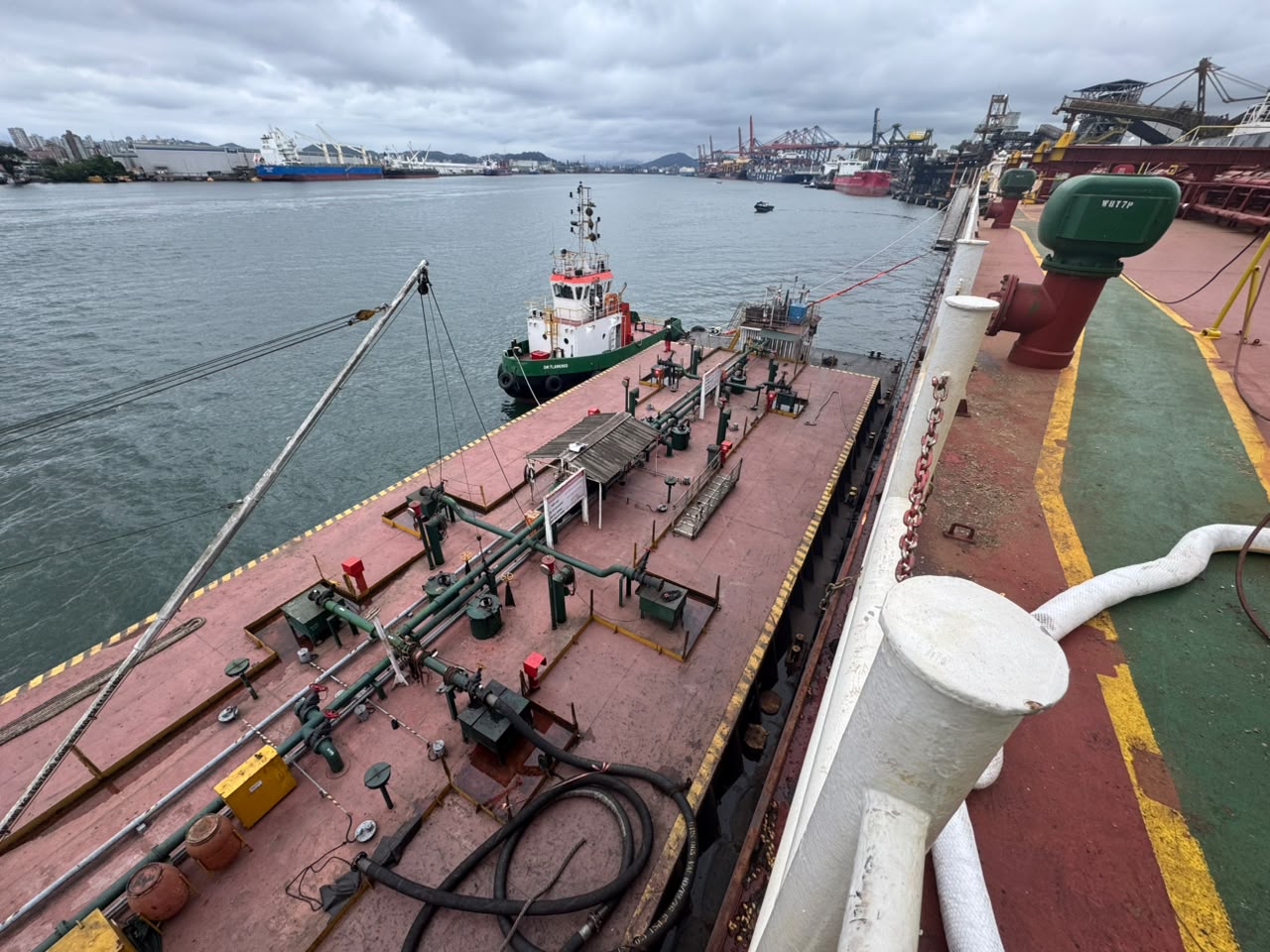
At Santos and the other Brazilian ports we combine the bunkers-remaining-on-board survey before delivery with the quantity survey of the delivery itself. One attendance, one report: ROB before and after, barge and vessel figures, temperatures and densities, sample seal numbers, time log of the operation and a Letter of Protest when the difference exceeds tolerance. Our Bunker Quantity Survey page describes the scope in detail.
How do you handle ROB timing when cargo operations never stop? If your vessels call at Santos, Paranaguá, Rio Grande or Aratu, talk to our Brazil team.